Thursday, September 20, 2012
The Garden - Volunteers, Food, Weeds and Blight
Wednesday, October 13, 2010
Oven Dried Tomatoes - Or - How to Stay Warm When The Temperature Cools!
A couple weeks ago, when we had some cooler days, I got started on this storage project.
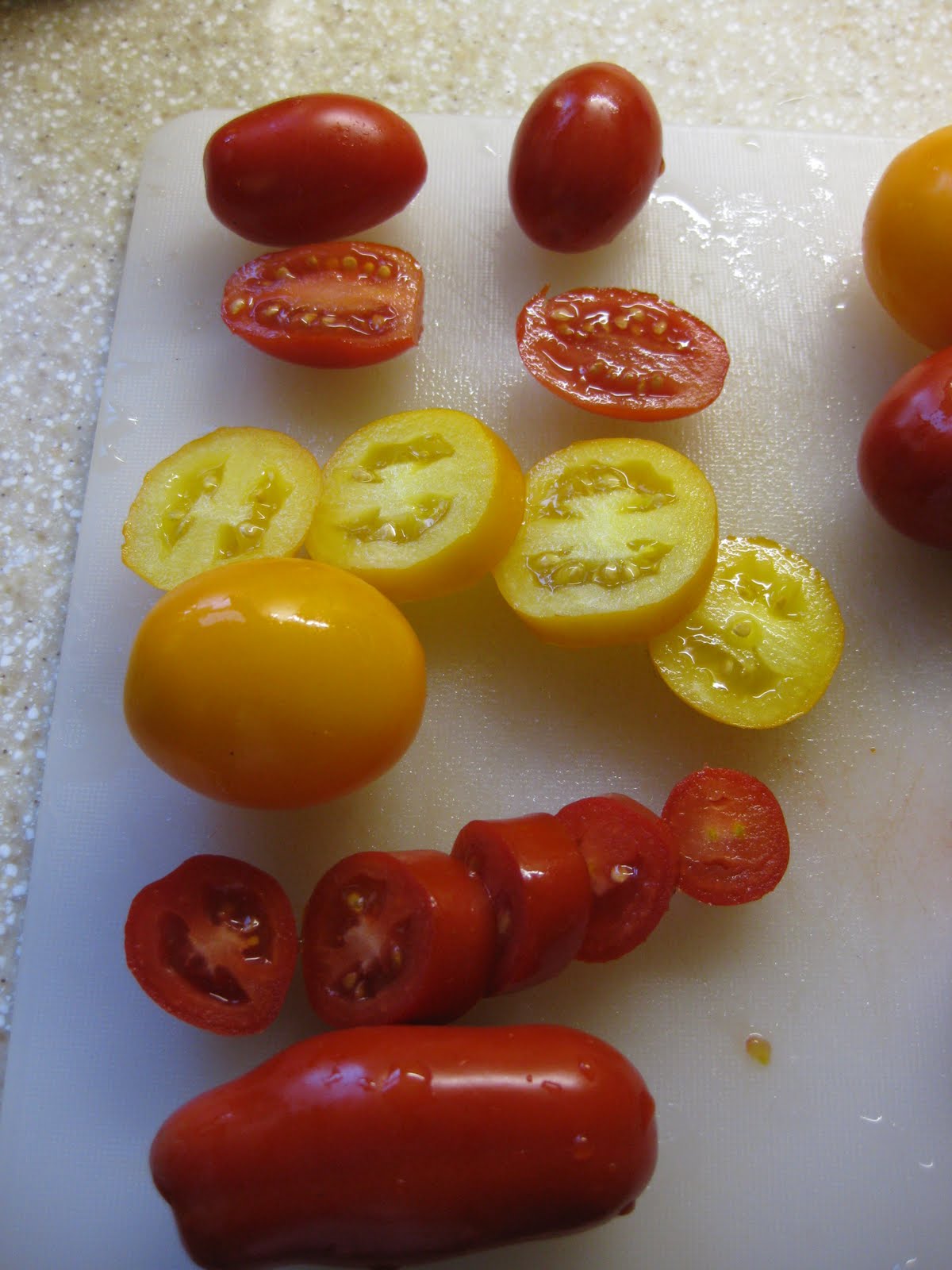
First I picked and washed a colander full of the small varieties of tomatoes from the garden. I had quite a bounty, and we just couldn't eat them fast enough.
For most of the tomatoes I just sliced them in half, but some of the bigger tomatoes were cut in slices for quicker drying. Next time I will quarter them instead.
Then I placed them in rows, not touching, in Pyrex dishes where I had sprinkled a layer of salt, and gave them another sprinkle of salt on top.
When you type in "oven dried tomatoes" in your "search" box, you will not find one recipe alike. Some have you marinate the tomatoes; heavily spice the tomatoes; oil the tomatoes; peel the tomatoes. I did none of this.
I would not recommend peeling the tomatoes though. The slices that exposed the flesh to the glass were reduced to almost nothing, and were difficult to pry from the glass. Resting the tomatoes on their skin make them easy to collect.
The first batch I made followed a dinner that had been cooking at 400 degrees. I popped the tomatoes in and let the oven cool to 200. I looked up several recipes that gave temperatures from 130 to 200F, and I would recommend 200F with occasionally moving things along with a temperature boost to 400 and then turning it back down to 200 for a couple hours.
One thing you need to be sure of is that the pieces are totally dry. You retrieve the pieces one by one, depending on size, and I think the process took at least eight hours. Maybe more. Some recipes said it would take 16 hours, so you may want to leave them on your lowest setting overnight. I did this on a dry day, so I'm sure that helped.
I then let them cool before I put them in a freezer bag to keep frozen for when I need them in a recipe. Again, some recipes stored the tomatoes in oil and I might do that another time, but I wanted mine to keep as long as possible without spoiling.Monday, September 6, 2010
Wednesday, August 26, 2009
Summer Salad


Sunday, August 9, 2009
Late Blight
According to plant pathologists, this killer round of blight began with a widespread infiltration of the disease in tomato starter plants. Large retailers like Home Depot, Kmart, Lowe’s and Wal-Mart bought starter plants from industrial breeding operations in the South and distributed them throughout the Northeast. (Fungal spores, which can travel up to 40 miles, may also have been dispersed in transit.) Once those infected starter plants arrived at the stores, they were purchased and planted, transferring their pathogens like tiny Trojan horses into backyard and community gardens. Perhaps this is why the Northeast was hit so viciously: instead of being spread through large farms, the blight sneaked through lots of little gardens, enabling it to escape the attention of the people who track plant diseases.
In my summary, this article makes another case for Buy Fresh-Buy Local in the case of starter plants. I'm not sure if the information is fact or theory, but it makes some sense. It will make me think more about my source choices
http://www.nytimes.com/2009/08/09/opinion/09barber.html?th&emc=th